Your facility needs consistent cleaning schedules tailored to specific risks, daily throughput, allergen management, and inspection schedules, including verifiable documentation validating food safety measures, inspection compliance, and public health regulations. The details below give guidance on sanitation program requirements.
Main Points
- Food safety cleaning professionals in Brampton serve restaurants, grocery departments, commissaries, warehouses, bakeries, schools, mobile vendors, and allergen-sensitive operations.
- High-touch surfaces, food-contact equipment, kitchens, floors, drains, restrooms, and storage areas are sanitized using area-specific procedures to eliminate cross-contamination.
- Proper chemical concentration, compatibility, and exposure duration are checked by certified specialists, with conclusion logged via tests, reviews, and remedial documentation.
- Hygiene plans must adhere to threat, throughput, changeovers, accidents, and standards, with routine, periodic, and annual tasks distributed by zone.
- Contractors ought to exhibit HACCP, sanitation competency, safety training instruction, liability, credentials, colour-coded tools, and audit-ready hygiene paperwork.
Which Brampton Establishments Need Food Safety Cleaning?
Brampton operations that deal with, maintain, prepare, package, or provide food require hygiene cleaning. Implement it if your operation is subject to public health inspections, food codes, or HACCP requirements. The rule covers eateries, dining facilities, warehouses, supermarket areas, meat counters, fish departments, retail outlets, and institutional kitchens.
You also need compliant food safety cleaning in supply warehouses, manufacturing facilities, refrigerated storage, bakeries, school feeding programs, reception facilities, and delivery centers. Mobile and temporary operations count too, including catering trucks, festival vendors, and pop-up food booths. If your staff handle ingredients, section prepared foods, heat finished items, or keep allergens stored, your facility needs documented cleaning protocols. In Brampton, cleanliness isn't discretionary; it's part of lawful, functional, and customer safety adherence.
Which Areas Do Brampton Cleaning Experts Cover?
Professional cleaning services specializing in Brampton disinfect high-contact surfaces, food preparation areas, floors, and sanitary facilities to satisfy food safety standards and health requirements. Emphasis on these spaces occurs because they pose maximum contamination danger, potential for accidents, and compliance issues.
Knowing their service areas allows you to confirm your operation's sanitation satisfies required standards and regulations.
Essential High-Touch Surface Sanitizing
set how often each zone is sterilized
company recommendations and health department rules to ensure proper function. Staff can employ surface testing to verify cleaning effectiveness
Kitchen Areas, Floor Surfaces, and Bathroom Spaces
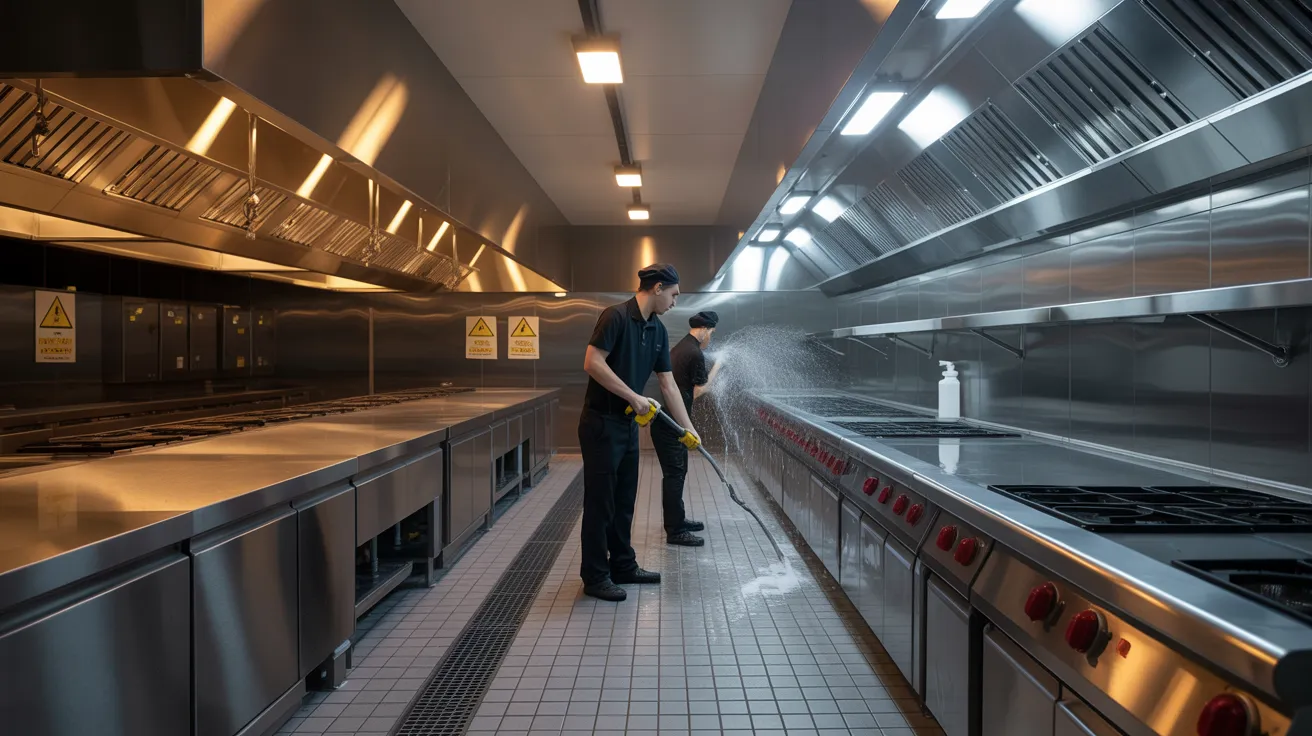
Brampton cleaning services focus on kitchens, floors, and restrooms as each zone involves different food safety, accident, and wellness concerns. In industrial kitchens, you need grease removal from cooking stations, appliance surfaces, drain systems, preparation areas, and backsplashes to reduce contamination and pest pressure.
You should also expect documented flooring maintenance. is also provided as part of the service.
For restroom sanitation, cleaners sanitize touchpoints, fixtures, partitions, dispensers, and waste containers, then refill items and eliminate smells. They also maintain restaurant cleaning supply rooms where product storage, sink cleanliness, and drain systems impact daily sanitation standards and worker protection.
How Food Safety Cleaning Benefits Brampton Operations
Brampton operations demand proper hygiene standards to meet compliance obligations and pass inspections. You also minimize cross-contamination by cleaning and sanitizing food-contact surfaces, equipment, and high-touch areas correctly. Most importantly, you safeguard community wellness by reducing the chance of food poisoning in your establishment.
Sanitary Standards Adherence
Brampton food establishments must comply with mandatory safety protocols, so food safety cleaning is vital to meeting health codes, defending customers, and avoiding penalties. You must maintain clean food preparation areas, written maintenance records, appropriate product handling, and verifiable staff procedures that align with municipal and provincial inspection expectations.
Extensive hygiene logs help you to show due diligence during official assessments and demonstrate your operations remain standardized, replicable, and documented. Comprehensive sanitation further promotes allergen control by limiting particles on mutual appliances and commonly contacted zones.
Cross-Contamination Prevention
Maintaining health code standards copyrights on your power to stop cross-contamination during everyday food preparation and sanitation. You need to partition uncooked items from finished dishes, sterilize work zones between assignments, and position cleaning agents away from food surfaces. Clear procedures reduce transfer risks and reinforce steady regulatory adherence.
Implementing allergen separation helps keep priority allergens from contacting communal work zones, bins, or devices. Utilize separate boards, color-labeled items, and strict utensil labeling so staff don't mix items during preparation or service. Enforce hand hygiene following fresh proteins, aquatic items, egg products, or allergen materials. Refresh cleaning cloths often, and validate disinfectant levels using test strips. When you train staff to follow these controls every shift, you establish a more hygienic, safer workplace that meets Brampton's food safety expectations regularly.
Community Health Assurance
When food safety cleaning weaken, you don't only face inspection setbacks—you expand the chance of foodborne illness affecting customers, staff, and the larger Brampton community. You also weaken your role in safeguarding community wellness, especially in busy food facilities where pathogens travel quickly through surfaces, equipment, and touchpoints.
You need sanitation systems that eliminate soils, sanitize effectively, and confirm results. This requires following contact periods, using authorized sanitizers, documenting procedures, and coaching employees to meet regulatory requirements. These measures prevent pathogen control by decreasing microbial counts before contaminating food or hands. Throughout Brampton, effective sanitation safeguards susceptible populations, reduces outbreak risk, and demonstrates your diligence. When you adhere to standards, you go beyond requirements—you mitigate risk and facilitate secure food handling throughout the area.
In What Ways Does Cleaning Help Achieve Food Safety Compliance?
Embracing thorough cleaning protocols secures food safety compliance by lowering contamination exposure, limiting pathogen development, and maintaining your facility's adherence to sanitation requirements under HACCP-based programs and public health regulations. You validate that product-contact areas are visibly clean and microbiologically controlled, backing documented preventive controls and inspection readiness.
Rigorous cleaning standards also enhance allergen mitigation by removing residues that can trigger undeclared allergen exposure.
Finding When to Schedule Commercial Cleaning
Ramp up cleaning pace during high-volume production, production changeovers, spill events, and after maintenance work.
facility shutdowns, seasonal soil accumulation, or times of elevated pest pressure. When your facility holds special events, catering functions, or public functions, arrange cleaning right before and following for effective event turnaround
How Do You Choose Brampton Cleaning Experts?
Begin by evaluating providers based on food-safe sanitation requirements—not solely on price alone. You should confirm that each organization comprehends CFIA, public health, and HACCP-aligned expectations applicable to your facility. Request proof of insurance, WHMIS compliance, staff training documentation, and oversight procedures. Assess whether technicians recognize cross-contamination risks, chemical handling protocols, and verifiable sanitation records.
Additionally, you need to evaluate operational reliability and accountability. Obtain references from food facilities in Brampton, then review response times, corrective-action procedures, and communication practices. Verify the company conducts examine this material supplier reviews and can deliver inspection-ready documentation when inspectors or external parties need proof. Verify equipment is maintained, color-coded equipment are applied correctly, and site-specific hazards are identified. A qualified provider protects compliance, product integrity, and your reputation.
What's included in a sanitation cleaning strategy?
Establish a documented plan that clarifies every sanitation task, standard, and responsibility before production begins. You should specify cleaning frequencies, approved chemicals, dilution rates, contact times, tools, and verification methods for each sector, surface, and equipment. Make sure to include pre-operational inspections, corrective actions, and employee training requirements.
Your program should also cover contamination prevention, garbage management, pest control procedures, and recorded timelines for restrooms, drains, floors, and food-contact areas. Detail how you'll separate raw and ready-to-eat processes, support ingredient tracking, and ensure accurate allergen labeling through validated cleaning between product changes. You should assign accountability, maintain signed records, and review results against regulatory standards, HACCP controls, and customer requirements. When gaps appear, update procedures immediately and retrain staff.
Popular Inquired Inquiries
Do sanitation providers operate during nighttime hours at Brampton facilities?
If you manage controlled environments, you'll also require records that support audits and ensure compliance.
Do sanitation professionals offer emergency spill response services?
Yes, you can locate Brampton sanitation experts providing hazard containment options. They handle hazardous incidents, evaluate risks, contain affected zones, and initiate rapid cleanup to minimize exposure and avoid operational impact. You should verify response rates, certifications, safety protocols, and waste procedures. If your facility must adhere to regulations, pick a provider that tracks incidents, adheres to standards, and supports verification.
Do eco-friendly disinfectants perform safely on food-contact surfaces?
Definitely, eco-friendly disinfectants perform safely on food preparation areas if you select items marked food-safe that satisfy regulatory compliant. You ought to validate exposure duration, dilution ratios, and rinse procedures before use. Botanical formulations lower chemical hazards, but you must have confirmation of performance against relevant pathogens. To ensure residue free surfaces, adhere to exact manufacturer guidelines and verify your cleaning agent satisfies food industry regulations.
Will maintenance plans adapt to production fluctuations?
Without question, cleaning schedules adapt well for seasonal variations. Revise intervals, labor allocation, cleaning agents, and testing procedures to correspond to operational cycles while preserving regulatory compliance. Reduce production interruptions by scheduling sanitation surrounding line changes, peak seasons, and operational patterns. Further modify SSOPs, employee training, and environmental monitoring to account for transient threats, emerging allergens, or elevated soil levels. Consistent reviews maintain the strategy effective.
Do professional cleaning services educate staff on hygiene standards?
Indeed, commercial cleaning providers typically provide employee coaching on proper hygiene. Your staff obtains instruction on safe chemical application, exposure durations, preventing cross-contamination, equipment disassembly, and record-keeping. They typically follow instruction with HACCP, GMP, and CFIA or regional health standards requirements. Many also execute sanitation audits to confirm standards, reveal issues, and reinforce corrective actions. This assists you to establish reliable processes, achieve compliance, and decrease foodborne illness risks on a daily basis.
Summary
Partnering with Brampton food safety and commercial cleaning professionals goes beyond tidying—it guarantees your operation meets inspection standards and your standards are defensible. From kitchen areas to production zones, each cleaned area and maintained corner lessens contamination risk and avoids costly disruptions. By arranging service at suitable frequencies and executing a comprehensive cleaning strategy, you protect your workforce, clients, and your reputation. In a tightly controlled market, clean environments can't be overlooked—they're critical to business success.